# Emails

### 1. Language Setting

This help you change the some defaults information in email.

Go to Template -> Select your active email -> Language settings

{% hint style="info" %}
**Note:** You can edit your inactive template. When you save your edits, it will be actived and replace your current template.
{% endhint %}

<figure><img src="/files/bd7wdLhAeI8RBrBlF0Jc" alt=""><figcaption><p>Each language is a distinct version of the email template</p></figcaption></figure>

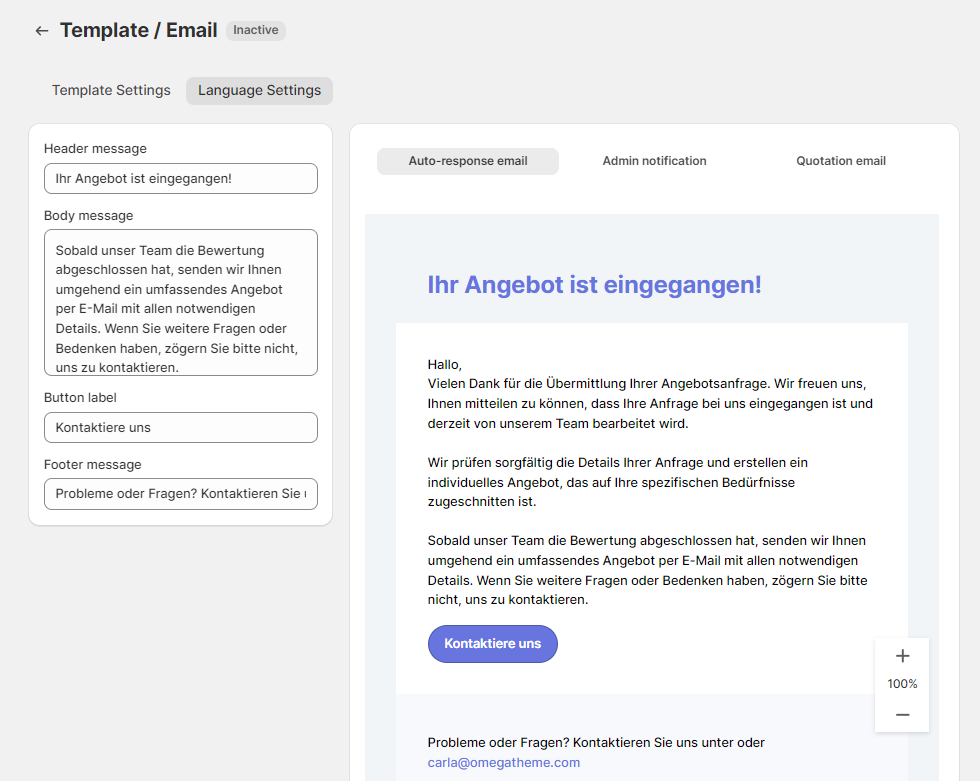
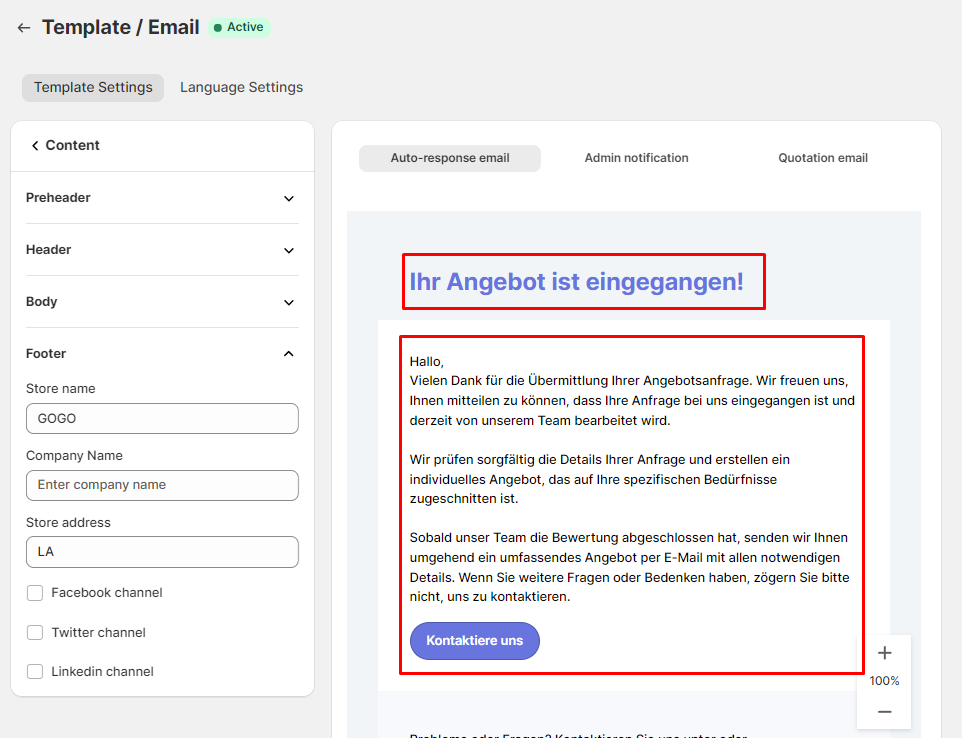
You can change information from English into your language. Click save when you're done. New information will be updated to template settings.

<figure><img src="/files/3ADyL4iyIkz4q0bUDjJz" alt=""><figcaption></figcaption></figure>

<figure><img src="/files/PcLcndKLzuuvkURHwnpv" alt=""><figcaption></figcaption></figure>

### 2. Multi-Language

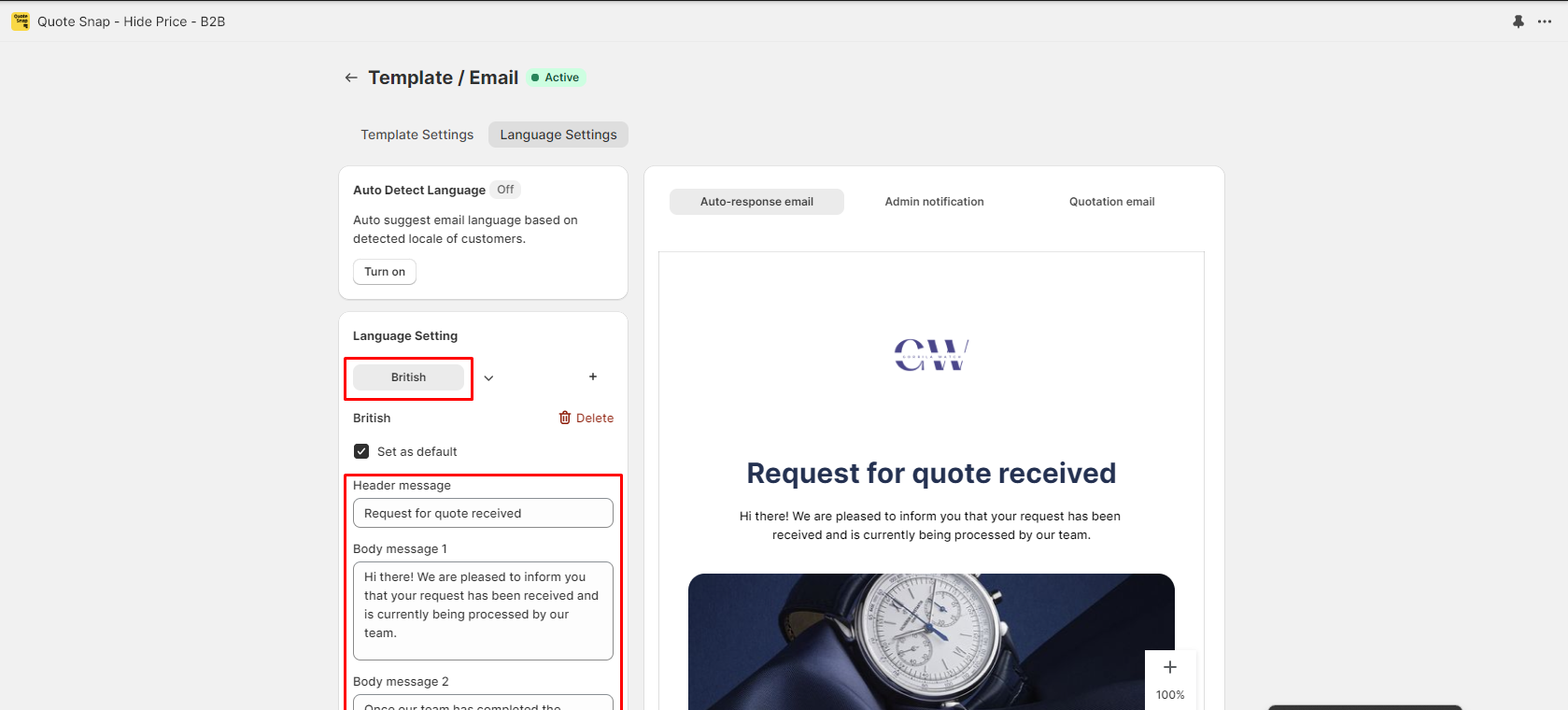
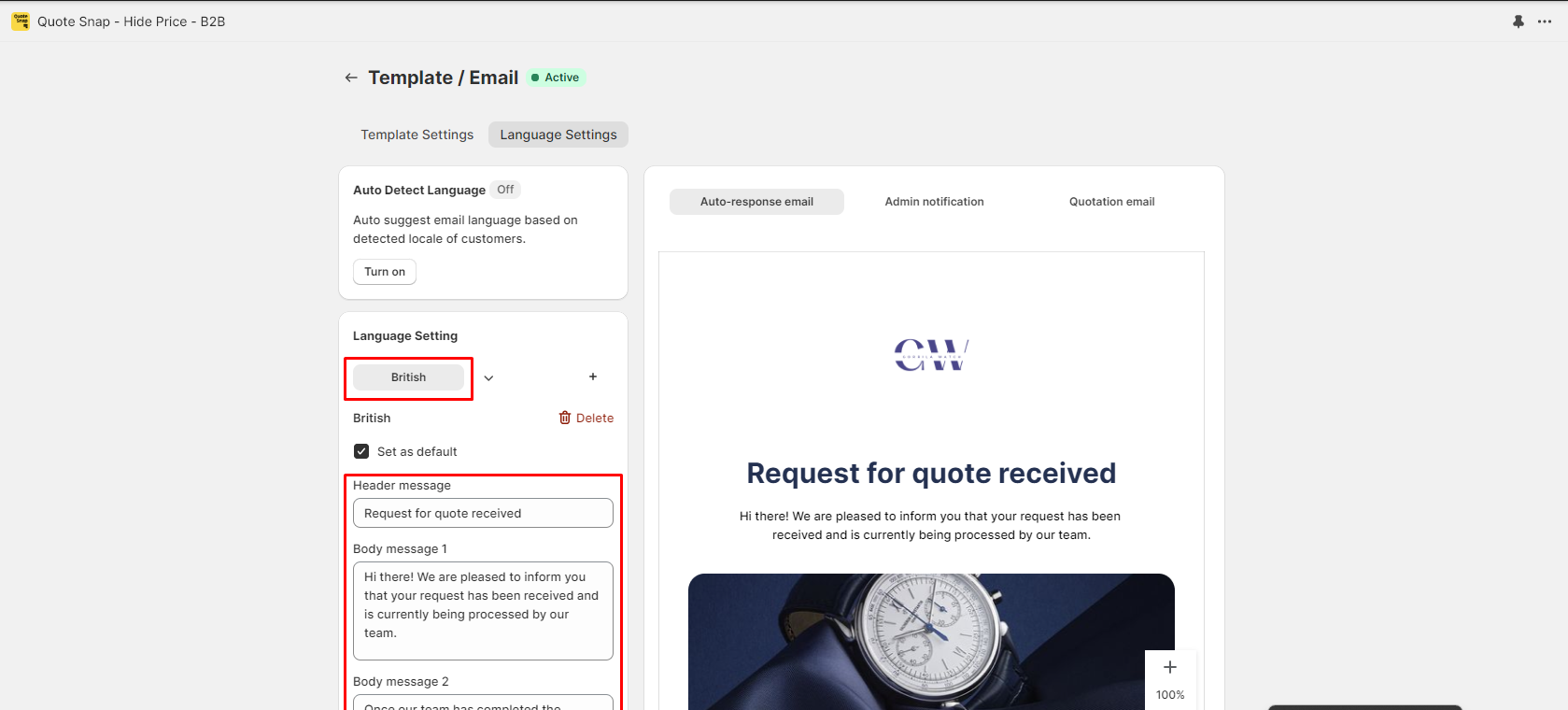
At the initiation, a default language, British/English, is preset. You can add 1 or more language versions to the PDF template. Each language version contains a distinct list of text labels via email template, displayed in the form of text fields.

<figure><img src="/files/Vvl3KQrWhwj2nZiVoQ7k" alt=""><figcaption><p>Each language is a distinct version of the email template</p></figcaption></figure>

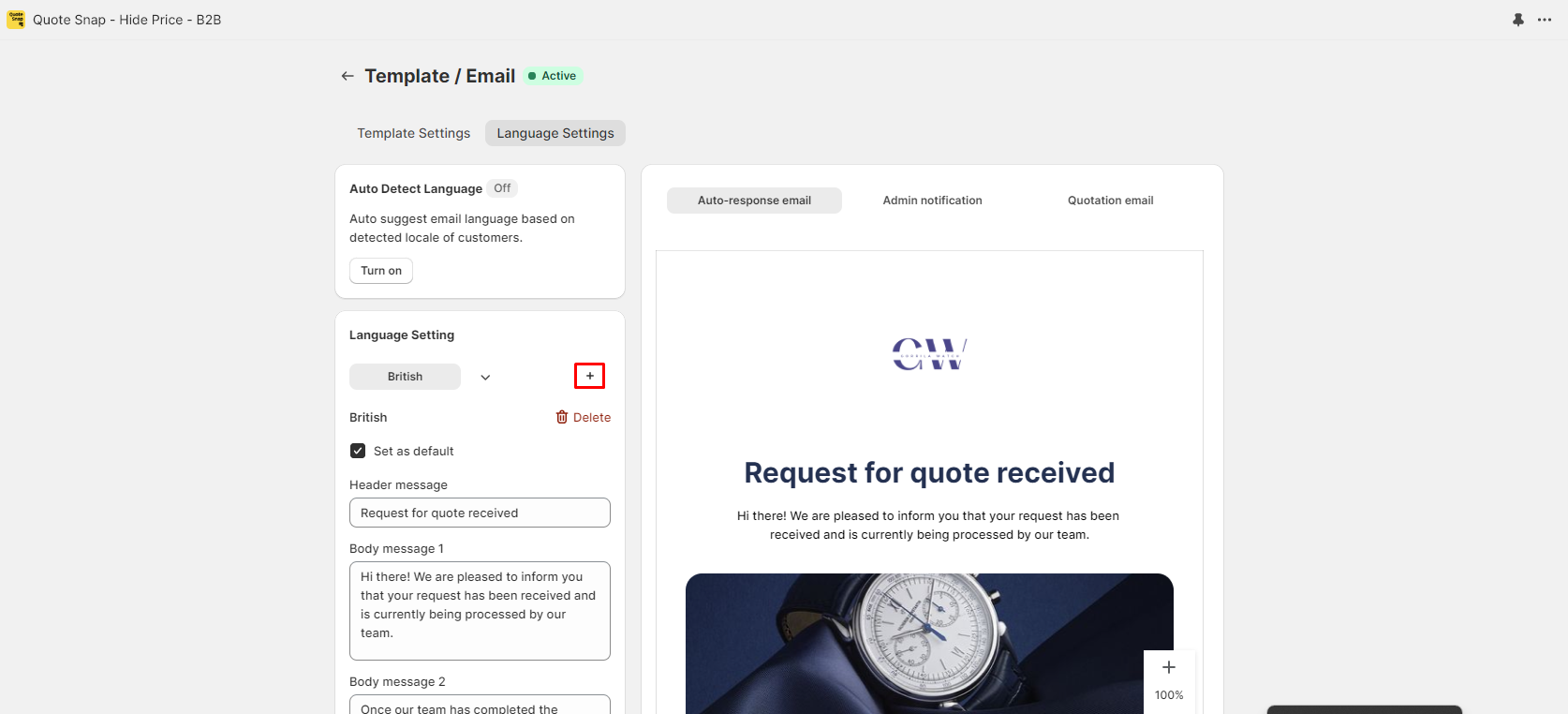
**Add a language version:** You can add 1 or more language versions by clicking on the :heavy\_plus\_sign: icon on the right of the language tabs. As a result of adding more language versions to this feature, the Quote Detail feature will present these options while you are trying to send either an auto-responder email or a quotation email to your customers.

<figure><img src="/files/BSYmYRuzon9fIpofSFng" alt=""><figcaption><p>You can add 1 or more language versions to the email template</p></figcaption></figure>

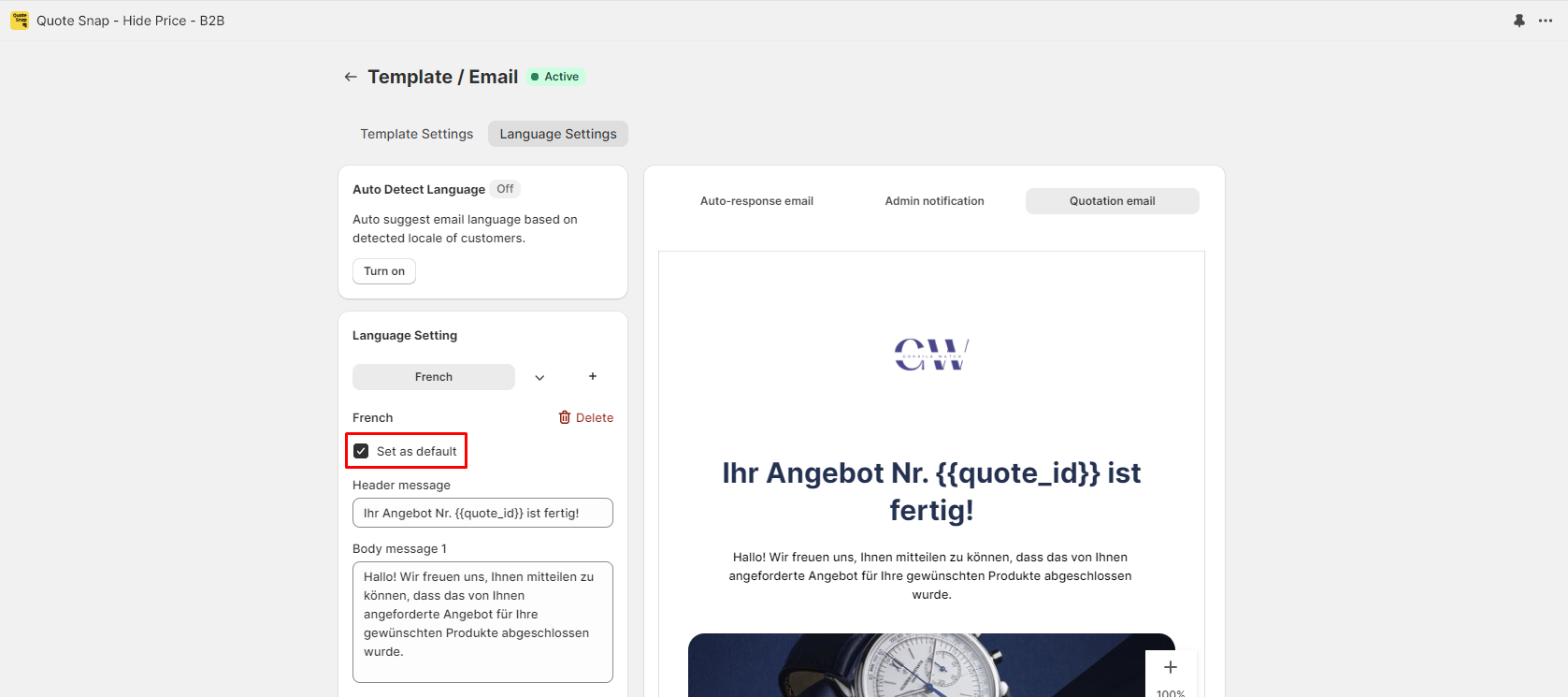
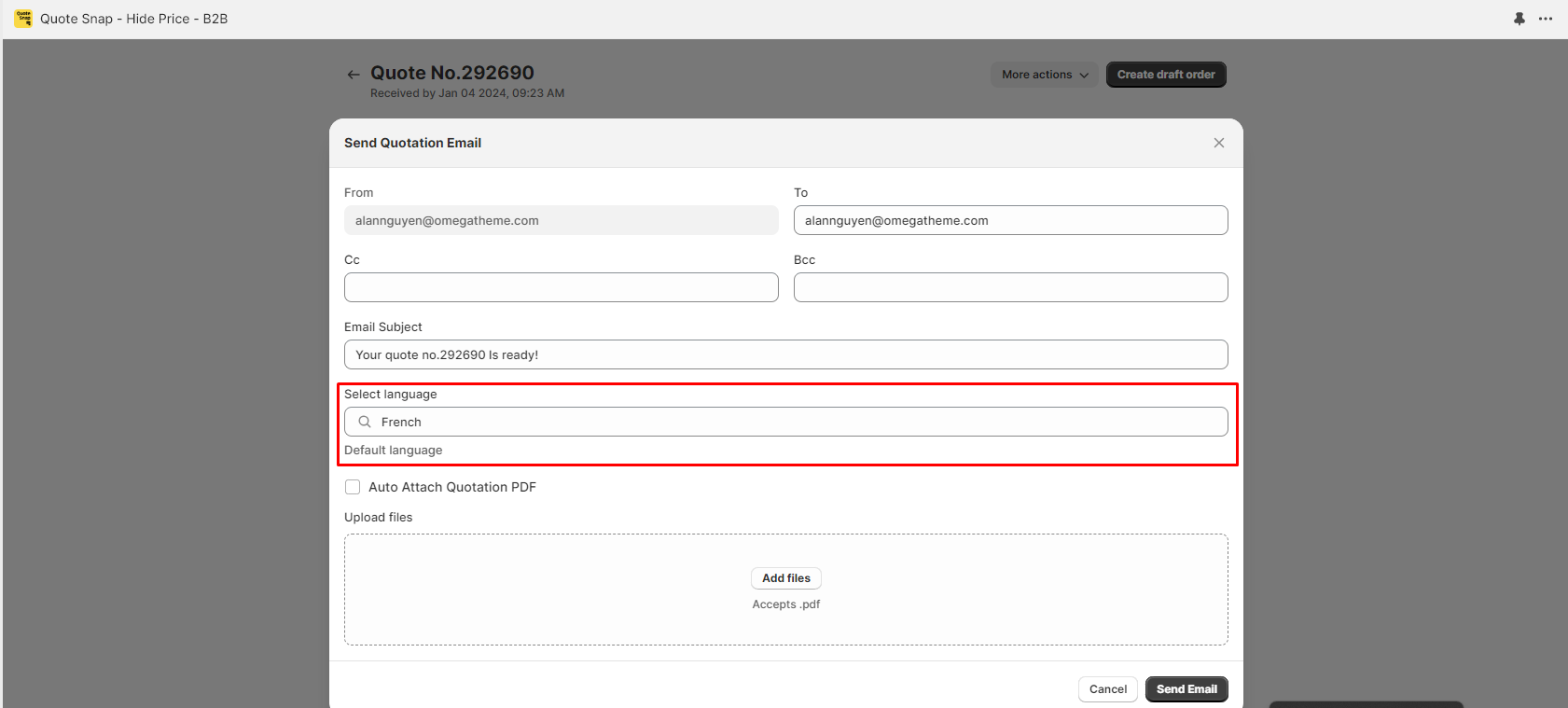
**Set a language version as default:** When a language version is marked as ‘Set as default’, it will be automatically chosen as the default language for email when you try to send one to your customers.

<figure><img src="/files/tipUMsoXSR1vQLynRVKc" alt=""><figcaption><p>Set British as the default language of Quotation email</p></figcaption></figure>

<figure><img src="/files/jfOWfNnehA9mLXiGqxkj" alt=""><figcaption><p>French will automatically be selected whenever you want to send quotation email to customers</p></figcaption></figure>

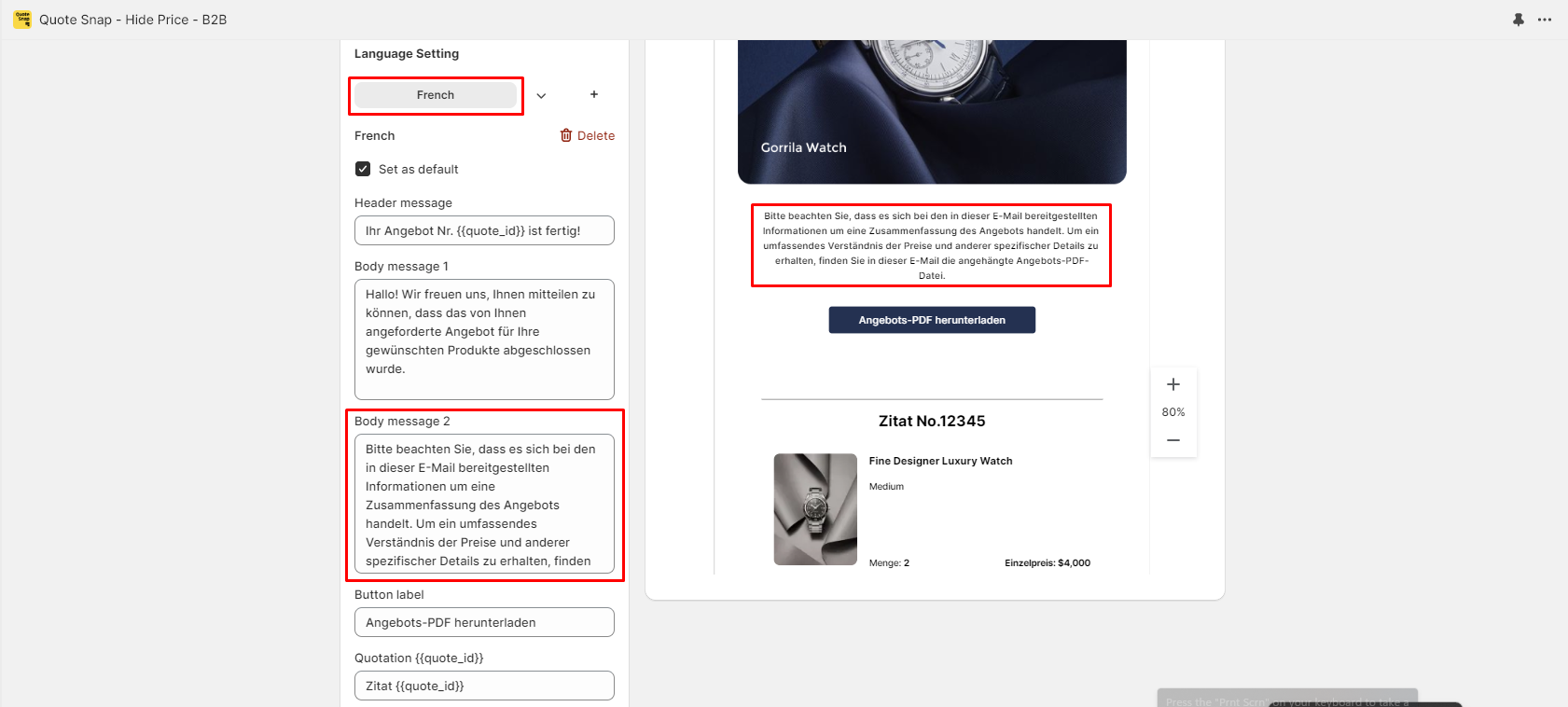
**Edit text label on a language version:** You can adjust or delete all text labels on the PDF template to align with the chosen language.

<figure><img src="/files/Z6Og1n3hkDbLiRHWfG4Y" alt=""><figcaption><p>Creating a PDF template version in French <span data-gb-custom-inline data-tag="emoji" data-code="1f1eb-1f1f7">🇫🇷</span></p></figcaption></figure>

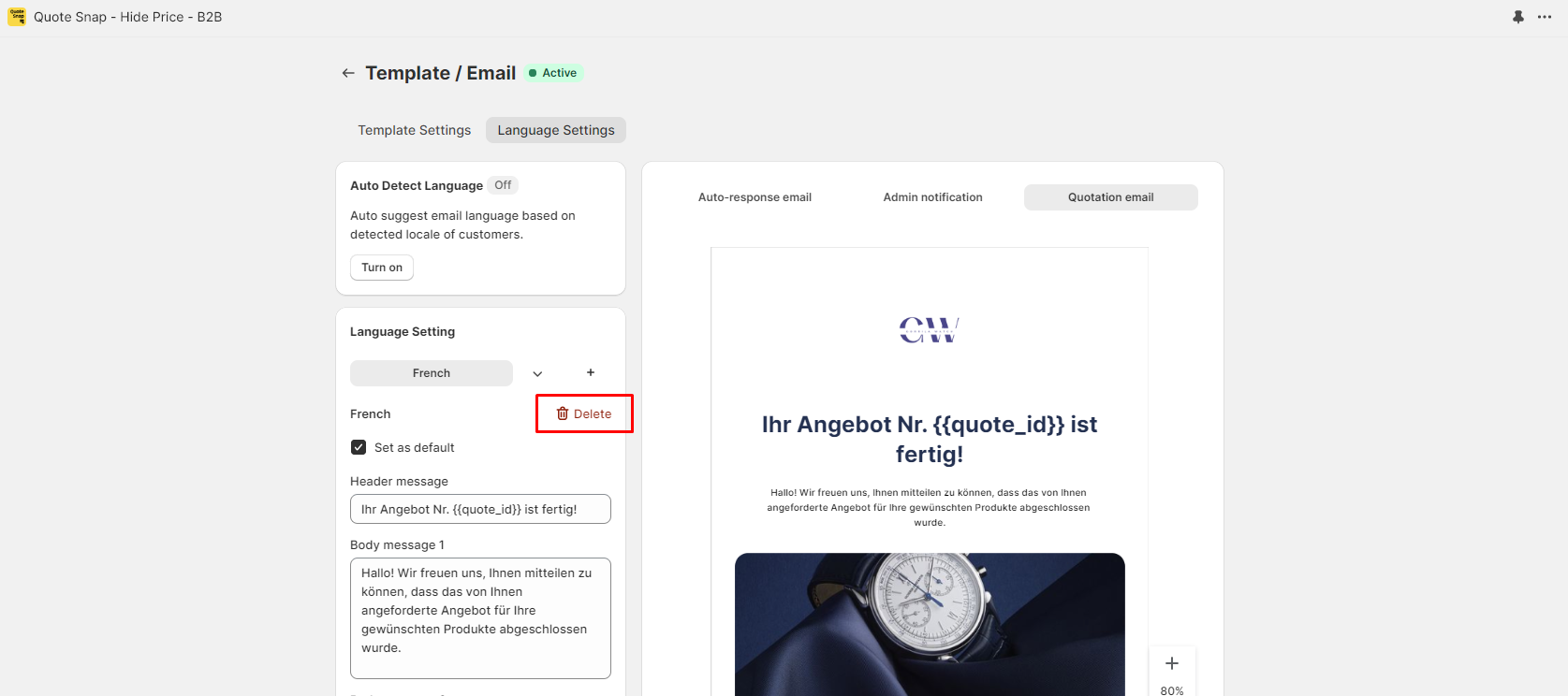
**Delete a language version:** You can remove a language version by clicking on the Delete button of the corresponding language tab.<br>

<figure><img src="/files/4AfuHZNUt48VBmJmdPAq" alt=""><figcaption><p>Delete French language</p></figcaption></figure>

### 3. Auto Detect Language

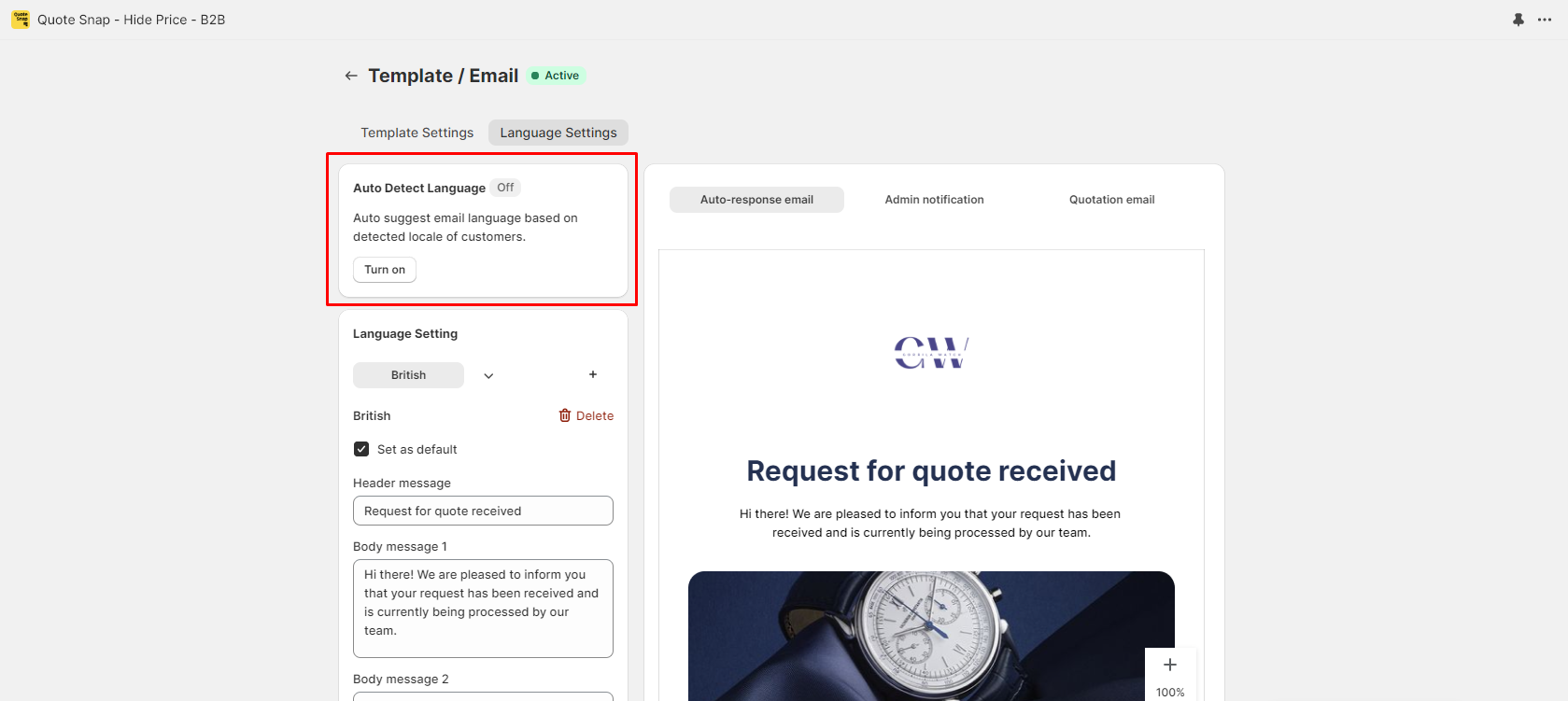
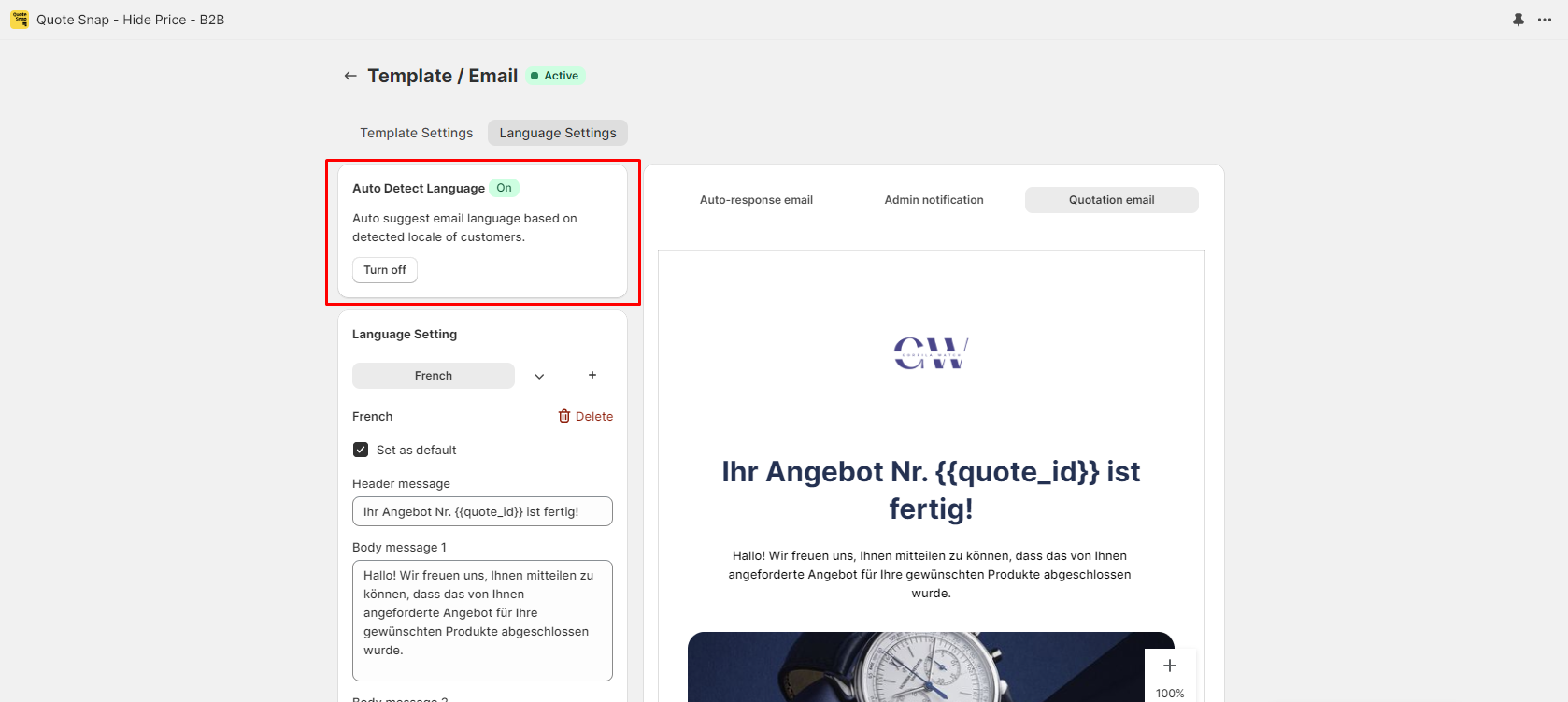
While this function is not available for admin notification emails, it works separately for the 2 remaining email types, including auto-response and quotation emails. This means you can choose to enable it for auto-response emails and disable it for quotation emails, for example.

<figure><img src="/files/LDF3AOsBtR8YrtTe9MNB" alt=""><figcaption><p>Auto Detect Language function on Auto-response email tab</p></figcaption></figure>

**For Auto-response emails:**&#x20;

When activated, it automatically detects the customer's language and sends the auto-responder in that language. However, there is a precondition to be met that is you must have the corresponding language version available in your language setting list.&#x20;

For example, if a German customer submits a quote request, and you already have a German version of the auto-response email, the email will be sent in German.

**For Quotation emails:**&#x20;

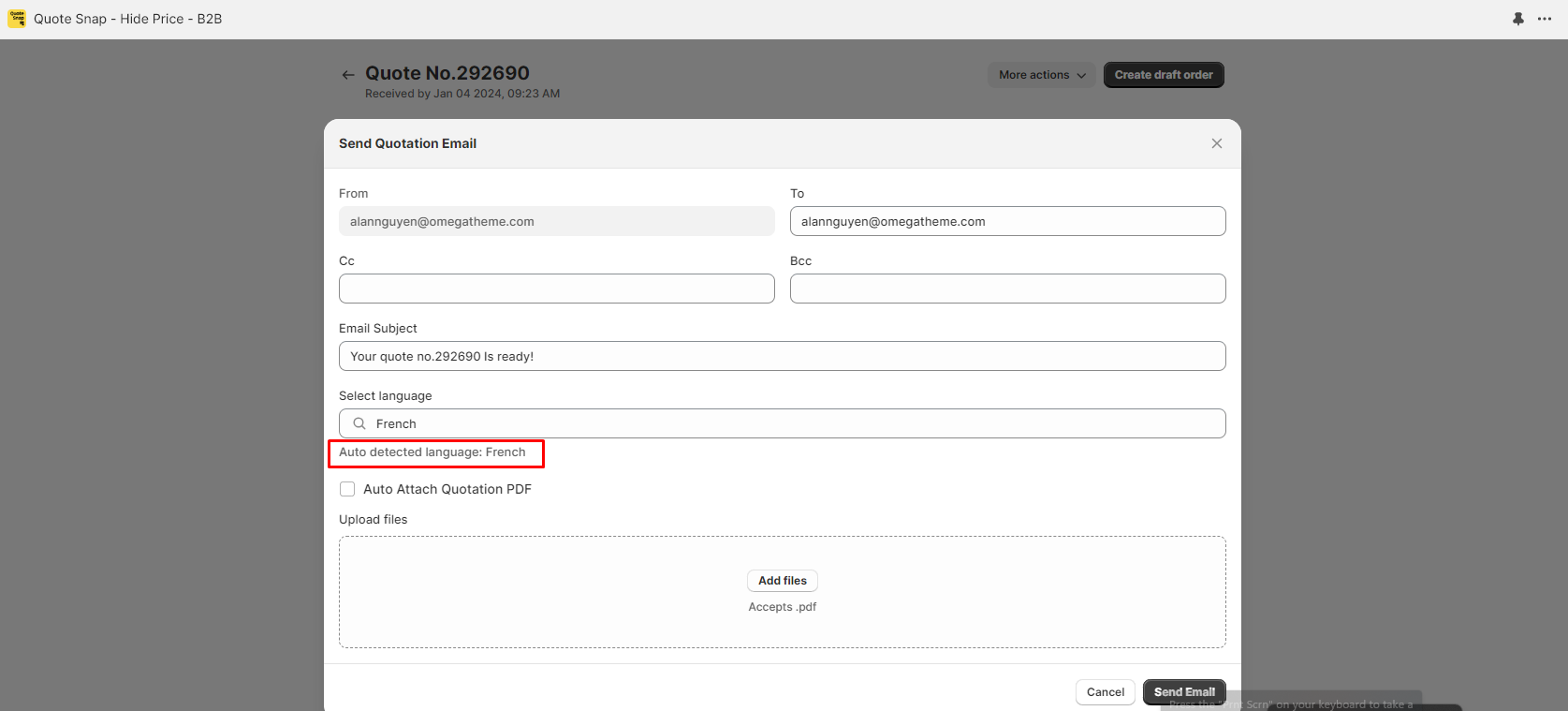
When activated, this feature automatically identifies and recommends the language used by customers submitting the quote requests, during the process of sending out a quotation email to customers. The language identification technique is based on the customers' locales.

<figure><img src="/files/GCLyV0ugsAeQmUxFw45I" alt=""><figcaption><p>How to activate it</p></figcaption></figure>

<figure><img src="/files/jSYpzETXVZiju4j2Gsa0" alt=""><figcaption><p>How it works: System automatically detects the language this customer used is French</p></figcaption></figure>

<figure><img src="/files/EdmXGQLwuCronla96qGe" alt=""><figcaption><p>How to activate it</p></figcaption></figure>

<figure><img src="/files/48NceonMVdheYlSZrfNi" alt=""><figcaption><p>How it works: System automatically detects the language this customer used is French</p></figcaption></figure>


---

# Agent Instructions: Querying This Documentation

If you need additional information that is not directly available in this page, you can query the documentation dynamically by asking a question.

Perform an HTTP GET request on the current page URL with the `ask` query parameter:

```
GET https://docs.quotesnap.net/language-setting/emails.md?ask=<question>
```

The question should be specific, self-contained, and written in natural language.
The response will contain a direct answer to the question and relevant excerpts and sources from the documentation.

Use this mechanism when the answer is not explicitly present in the current page, you need clarification or additional context, or you want to retrieve related documentation sections.